Struggling with lower back pain? Learn fast, evidence-based physio tips to reduce pain, stay active, and recover quickly.
If you’re dealing with lower back pain, understanding what actually works can make a big difference. At our Sydney clinic, we regularly treat non-specific low back pain using evidence-based physiotherapy strategies focused on movement, strength, and long-term prevention.
 How to Relieve Lower Back Pain Fast: What Actually Works?
Lower back pain has a way of showing up at the worst possible time, after a long day sitting, periods of heavy lifting, or sometimes for no obvious reason at all. It can even be triggered by stress. The reassuring part is that most cases are what we call non-specific low back pain. This means that more often than not there is no serious structural damage, but rather a combination of irritated joints, sensitive discs, and surrounding muscle tightness.
The two structures in the spine commonly involved are the intervertebral discs and the facet joints. Discs act as shock absorbers between the vertebrae and can become irritated with prolonged sitting, repetitive bending, or sustained loading. Facet joints on the other hand, which sit at the back of the spine and guide movement, can become irritated with repeated extension, compression, or uneven load distribution. When either of these structures becomes aggravated, the surrounding muscles often tighten as a protective response, which can further contribute to stiffness and pain. Importantly, this doesn’t mean something is “out of place” or permanently damaged, these tissues are designed to adapt and usually settle well with the right approach.
Rest vs Exercise for Back Pain
One of the biggest misconceptions about back pain is that rest is the best treatment. When in reality, too much rest often slows recovery and exacerbates painful symptoms. Gentle, controlled movement helps restore normal joint movement, improves circulation to irritated tissues, and reduces stiffness. Staying completely still causes joints to become more restricted and muscles to tighten further, which can prolong symptoms.
That being said, the goal isn’t to ignore pain or push through sharp discomfort. Early management is about relative rest, temporarily reducing activities that clearly aggravate your symptoms, such as heavy lifting, repeated bending, or prolonged sitting. At the same time, you should aim to stay lightly active. Short walks, regular position changes, continuing simple daily activities and exercises guided by your physiotherapist are often enough to begin easing symptoms within the first 24 to 48 hours.
Specific movements can also provide relief. Exercises such as pelvic tilts, knee rocks from side to side, cobra stretches or a slow cat-cow stretch can help to restore movement to the spine. Now, whether or not you have a facet joint or a discogenic presentation will influence what exercises will benefit you the most and speed up your recovery. Typically, discogenic type back pain will respond nicely to extension-based exercises whilst facet joint pathologies often respond well to flexion-based exercises. It is important that you seek advice from your physiotherapist to get the best out of your exercises.
Heat vs Ice: What works best?
Another question we often get asked is if applying heat or ice is more beneficial in the early stages. Often for acute injuries such as sprained ankles, strained muscles and contusions we would recommend ice to restrict blood flow which will increase swelling in these areas. However, with lower back pain we often recommend heat. Whilst heat doesn’t directly change the condition of the discs or facet joints it can help to reduce muscle spasm and in turn allow you to move more freely which is a critical part of recovery in the early stages. Thermoreceptors are specialised nerves in the body that detect changes in temperature. These are stimulated when heat is applied which can often block signals to nociceptors which are the special nerves that detect pain. Not only will heat have a local effect on the tissues surrounding the area but also inhibit the nociceptors’ ability to register pain.
What not to do with Lower Back Pain
It’s also important to address a few common approaches that don’t tend to help as much as people expect. Complete bed rest or prolonged periods of inactivity is rarely beneficial and often leads to increased stiffness and delayed recovery as outlined above. On the flip side it isn’t recommended to push through pain. Although a low level of discomfort and stiffness is to be expected when mobilising irritated tissues; pain should not be sharp, high level and disabling!
How to Prevent Lower Back Pain Recurrence
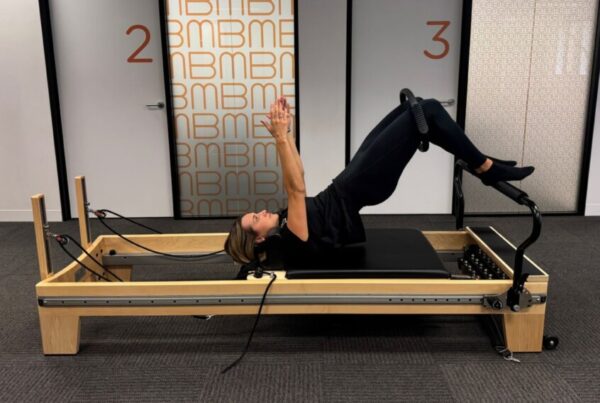
Strengthening is a great way to build resilience and to reduce the likelihood of exacerbations. Strengthening doesn’t need to be complex. Simple exercises that target control and encourage good spinal mobility such as bridges, controlled leg movements, and basic core stability work can make a meaningful difference over time. The goal is to improve how load is distributed through the body, rather than overloading the lower back during everyday tasks. Pilates is a great way to target these specific areas. Equally important is gradually reintroducing movements that may have become uncomfortable, such as bending forward, lifting, or sitting for longer periods. Avoiding these movements entirely can lead to increased sensitivity and reduced tolerance over time. Instead, building them back up progressively helps restore both physical capacity and confidence.
Most episodes of lower back pain improve significantly within a few weeks. While this can be frustrating in the short term, it also highlights that the condition is usually self-limiting and responsive to simple, consistent strategies. The biggest difference between a quick recovery and a lingering issue often comes down to how you respond early on: staying gently active, avoiding extremes, and allowing irritated structures to settle while maintaining healthy movement.
If your back pain isn’t improving or keeps coming back, a personalised assessment can make all the difference. Our Sydney physio team can help you recover faster with a personalised treatment plan. Book an appointment today to get started.
Common low back pain FAQs
What is the fastest way to relieve lower back pain at home?
The fastest way to relieve lower back pain is usually to stay gently active and avoid prolonged rest. You can also use heat therapy to reduce muscle tension. Light movement such as walking and simple mobility exercises can help reduce stiffness and improve recovery within the first 24–48 hours.
Should I rest or stay active with lower back pain?
Staying active is generally better than resting completely. Too much rest can increase stiffness and slow recovery, while gentle movement helps restore normal function and reduce pain.
Is heat or ice better for lower back pain?
Heat is usually more effective for lower back pain, as it helps relax tight muscles and reduce pain signals. Ice is typically more useful for acute swelling in injuries like sprains, rather than non-specific back pain.
What exercises help relieve lower back pain quickly?
Exercises such as pelvic tilts, knee rocks, cat-cow stretches, and gentle extension or flexion movements can help. The best exercises however depend on whether your pain is disc-related or facet joint-related and if your back with therefore prefer extension or flexion biased exercises. Your Physio can help to assess and provide tailored exercises for your pain.
When should I see a physiotherapist for back pain?
You should consider seeing a physiotherapist if your pain is severe, not improving after a few days, keeps returning, or is limiting your daily activities.
What causes lower back pain without injury?
Lower back pain can occur due to prolonged sitting, poor movement patterns, muscle tightness, or irritation of spinal structures like discs and facet joints, even without a specific injury.