The gluteal muscles are among the most powerful and important muscle groups in the body. They stabilise the pelvis and spine, generate power through the hips and protect the lower back, supporting everything from standing up out of a chair to climbing stairs and lifting objects off the floor.
At Bend + Mend in Sydney CBD, we see the effects of glute strength, or a lack of it, in almost every type of Pilates and physiotherapy consultation. In Pilates, particularly on the Reformer and Wunda Chair, glute training is approached with precision, control and balanced muscle activation rather than simply lifting heavier weights.
Whether your goal is better posture, improved athletic performance, injury prevention or moving without pain, strengthening the glutes is almost always the best place to start.
Key takeaways
- Strong glutes stabilise the pelvis and spine, generate power and protect the lower back.
- The Reformer trains the glutes through larger, flowing movements; the Wunda Chair adds smaller, more isolated work that challenges balance.
- Weak glutes are commonly linked to lower back, hip and knee pain, and to poor balance.
- Physio-led Clinical Pilates at Bend + Mend tailors glute strengthening to your body, whether you’re new to Pilates or an experienced athlete.
Understanding the Glute Muscles
The gluteals consist of three primary muscles:
- Gluteus maximus – the largest muscle, responsible for hip extension, climbing stairs, standing from a chair and generating power.
- Gluteus medius – located on the side of the hip, essential for pelvic stability, balance and controlling movement when walking or standing on one leg.
- Gluteus minimus – works alongside the gluteus medius to stabilise the hip and support single leg movement.
Each muscle has a unique role, and Pilates can help target these muscles independently.
Why Strong Glutes Are Important
- Better Pelvic and Spinal Stability
The glutes help maintain proper alignment of the pelvis and spine. When they are functioning well, other muscles, particularly the lower back and hip flexors, don’t need to compensate.
This can contribute to:
- Reduced lower back discomfort
- Improved posture
- Greater control during movement
- Improved Balance and Coordination
The gluteus medius plays a key role in stabilising the pelvis during walking, running and single leg activities.
Strong hip stabilisers can help:
- Improve balance
- Enhance coordination
- Reduce the risk of falls
- Support healthy movement patterns
- Enhanced Athletic Performance
Almost every athletic movement relies on strong glutes, including:
- Running and walking
- Cycling
- Tennis
- Golf
Power generated through the hips improves efficiency in each of these movements, while reducing unnecessary strain elsewhere in the body.
- Reduced Risk of Injury
Weak glutes are commonly associated with excessive stress on the knees, hips, ankles and lower back.
Proper glute strength may help reduce the likelihood of:
- Knee pain
- Hip instability
- Lower back strain
- Overuse injuries
- Everyday Functional Strength
Daily activities such as climbing stairs, lifting groceries, getting out of a chair or carrying children all rely heavily on the glutes. When the glutes aren’t strong enough for these tasks, the lumbar spine, hips and other joints often end up taking on that load instead.
Building functional strength makes these movements easier and more efficient.
Why Pilates Is Different
Unlike many traditional gym exercises that focus primarily on muscle size or maximum load, Pilates emphasises:
- Quality of movement
- Correct muscle sequencing
- Core and pelvic stability
- Control through the full range of motion
Rather than allowing stronger muscles to dominate, Pilates encourages the glutes to activate appropriately alongside the core, hamstrings and deep hip stabilisers. This creates strength that transfers effectively into everyday movement.
Here is an example of some right and wrong ways to do Pilates:
Strengthening the Glutes on the Reformer
The Reformer offers adjustable spring resistance that challenges the glutes while maintaining alignment and control.
Footwork Although often thought of as a leg exercise, correctly performed footwork activates the gluteus maximus throughout the pressing phase while encouraging proper hip and spine alignment.
Benefits include:
- Hip extension strength
- Pelvic stability
- Controlled lower limb alignment
Bridging Bridges on the Reformer challenge the glutes to lift and stabilise the pelvis while maintaining spinal control.
This exercise develops:
- Glute strength
- Hamstring coordination
- Core integration
Side Lying Leg Work With varying spring resistance, side lying exercises such as the clam specifically target the gluteus medius and minimus.
These muscles are vital for:
- Hip stability
- Balance
- Knee alignment
- Walking mechanics
Reformer Lunge Standing work requires the body to stabilise against moving resistance.
The glutes work continuously to:
- Control pelvic position
- Maintain balance
- Coordinate whole body movement
Strengthening the Glutes on the Wunda Chair
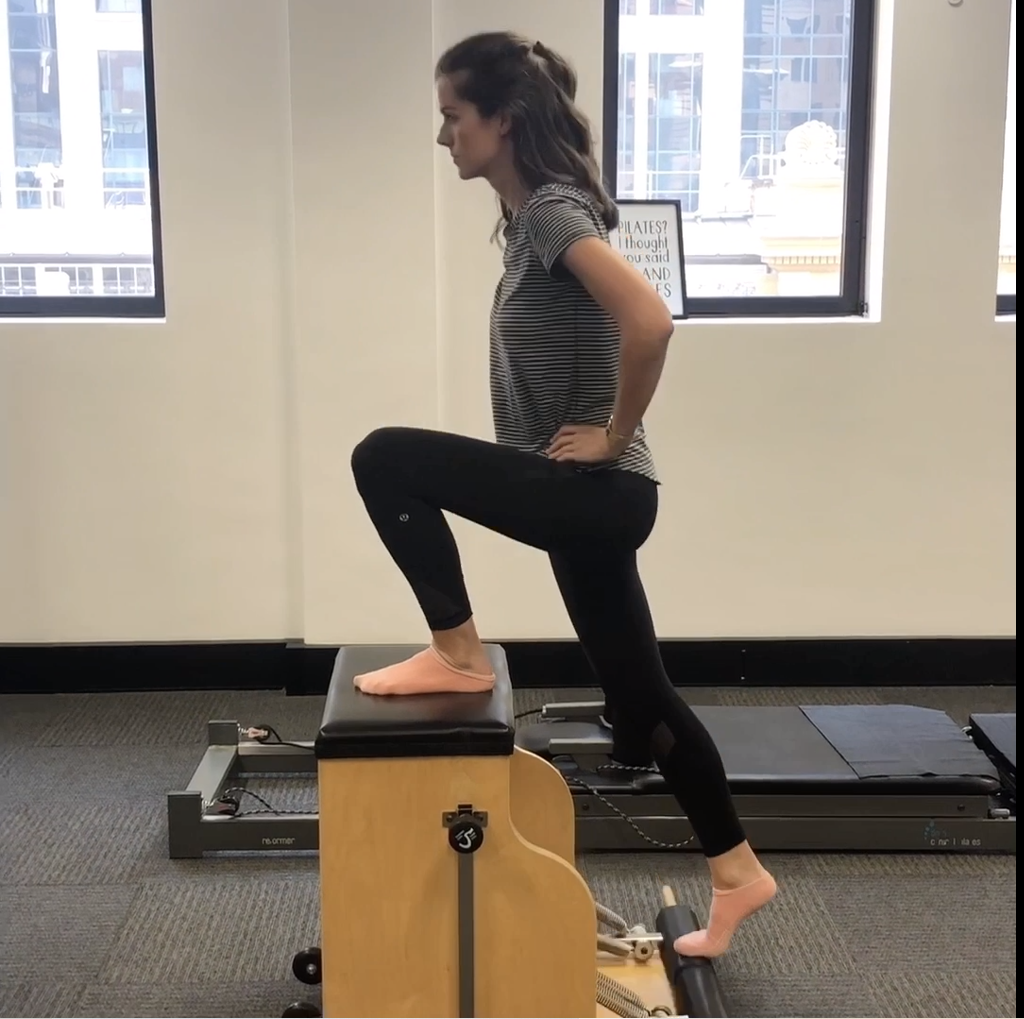
The Wunda Chair provides a unique challenge because of its vertically loaded spring resistance. Many exercises require significant balance, coordination and single leg control. Because so many exercises can be performed sitting or standing, it’s a versatile piece of equipment that suits all levels and needs.
Standing Presses and Single Leg Control Standing pedal presses recruit the glutes while demanding excellent pelvic stability. Many Chair exercises also isolate one leg at a time, helping identify and correct strength imbalances between sides.
These exercises improve:
- Hip control
- Single leg strength
- Functional balance and coordination
- Symmetry between sides
This mimics the mechanics of climbing stairs, making it a functional and challenging movement.
Common Signs of Weak Glutes
You may benefit from focused glute strengthening if you notice:
- Lower back tightness after standing
- Knees collapsing inward during squats
- Difficulty balancing on one leg
- Hip pain during walking or running
- Reduced power when climbing stairs
- Tight hip flexors despite stretching
These signs don’t always indicate weak glutes, but they often suggest the muscles could be functioning more effectively. If several of these sound familiar, a Clinical Pilates assessment with one of our physiotherapists can help identify whether glute weakness is contributing, and guide the right exercise progression for your body.
Pilates Principles That Maximise Glute Strength
Successful glute training isn’t simply about performing more repetitions. Pilates focuses on several key principles:
- Precision: small adjustments in alignment dramatically affect which muscles are recruited.
- Control: slow, controlled movement ensures the glutes are working and momentum is not relied on.
- Progressive resistance: both the Reformer and Wunda Chair allow spring resistance to be adjusted as strength improves.
- Balanced training: Pilates strengthens both sides of the body while integrating the core, hips and lower limbs into every movement.
Who Benefits Most?
Glute strengthening on the Reformer and Wunda Chair is valuable for:
- Office workers who spend long hours sitting
- Older adults wanting to improve balance
- Runners and cyclists
- Golfers and tennis players
- New and experienced Pilates participants
- Individuals recovering from certain lower limb injuries, as movements can be progressed and regressed easily
Frequently Asked Questions
Why are strong glutes important for Pilates? The glutes stabilise the pelvis and spine, generate power through the hips and protect the lower back. Strong glutes support everyday movements like standing, walking and climbing stairs, and are central to safe, effective Pilates practice on the Reformer and Wunda Chair.
What’s the difference between the Reformer and the Wunda Chair for glute strengthening? The Reformer uses sliding carriage resistance to train the glutes through larger, flowing movements such as footwork, bridging and lunges. The Wunda Chair uses vertically loaded springs for smaller, more isolated movements that demand greater balance and single leg control. Many of our clients use both as part of a well rounded programme.
How do I know if I have weak glutes? Common signs include lower back tightness after standing, knees collapsing inward during squats, difficulty balancing on one leg, hip or knee pain during walking or running, and tight hip flexors that don’t improve with stretching. A physiotherapy assessment can confirm whether glute weakness is contributing.
Can Pilates fix weak or imbalanced glutes? Pilates on the Reformer and Wunda Chair can be very effective for improving glute strength and correcting side to side imbalances, particularly when supervised by a physiotherapist who tailors the exercises, resistance and progressions to your body. It works well alongside other physiotherapy treatment for a more complete result.
How often should I do Pilates to strengthen my glutes? Most people notice benefits attending Clinical Pilates once or twice a week, alongside their other regular exercise. Your physiotherapist will recommend a frequency and progression plan based on your goals, current strength and any injuries you’re managing.
The Reformer and Wunda Chair offer a highly effective way to strengthen the glutes through controlled, functional movement. By combining resistance with technique, Pilates develops strength that supports better posture, improved balance, enhanced athletic performance and greater ease in everyday activities.
Whether you’re new to Pilates or looking to progress your practice, our physio-led Clinical Pilates sessions at Bend + Mend in Sydney CBD are tailored to your body, your goals and any injuries you’re managing. Book an assessment to find out how targeted glute work on the Reformer and Wunda Chair can help you move and feel your best.
 Related reading