Rotator cuff injuries are one of the most common reasons for shoulder pain, and they can range from an irritated tendon after a big week of training to a tear after a fall or heavy lift. If lifting your arm hurts, you’ve lost strength overhead or lying on your shoulder keeps you awake.

Rotator cuff tears are common and don’t always cause pain. In one imaging study of people with no shoulder symptoms, tears were found in about 1 in 5 people in their 60s and around 4 in 10 of those aged 70 and over.

What is a rotator cuff injury?

The rotator cuff is a group of four muscles and their tendons that wrap around the top of your arm bone and keep it centred in the shoulder socket as you move. An injury can mean an irritated or overloaded tendon (tendinopathy), a strain, or a partial or full tear. Some come on suddenly, such as a fall or heavy lift, while many build gradually from repeated overhead use or age-related wear.

Common signs and symptoms

  • Pain at the front or outer shoulder – Often spreading down the upper arm, but not usually past the elbow.
  • Pain lifting the arm or reaching overhead – Tasks like putting something on a high shelf or hanging washing become sore.
  • Night pain – Aching when you lie on the affected shoulder, or that wakes you in the early hours.
  • Weakness – Difficulty lifting the arm, carrying shopping or holding things out in front of you.
  • Clicking, catching or a sudden “pop” – A sudden pop with immediate weakness after a fall or lift suggests a more significant injury and should be checked promptly.

Causes and who gets it

  • Repetitive overhead activity – Painting, swimming, tennis, climbing, weights or overhead work can overload the tendons over time.
  • Age-related changes – Tendons change with age, and cuff problems become more common after 40.
  • Sudden injury – A fall onto an outstretched arm, a heavy lift or a sudden jerk.
  • A jump in activity – Increasing load faster than the shoulder can adapt, such as returning to training after a break.
  • Reduced shoulder blade and upper back control – Less support from the shoulder blade and upper back can leave the cuff working harder.

Our approach at Bend + Mend

  • Careful assessment to work out whether you have an irritated tendon, a partial tear or a larger tear, and to rule out the neck and other shoulder conditions
  • Pain-relieving strategies and clear guidance on which movements to modify and which to keep doing
  • Progressive strengthening of the rotator cuff, shoulder blade and upper back, which is the foundation of recovery for most rotator cuff problems
  • Manual therapy to ease pain and tension and improve movement
  • Referral for imaging or a surgical opinion where it’s warranted, and post-surgical rehab if surgery is needed

Frequently Asked Questions

Can a torn rotator cuff heal without surgery?

A torn tendon doesn’t always heal on its own, but many people, particularly with partial tears or gradual-onset tears, recover good strength and have less pain through a structured strengthening programme. Surgery is more commonly considered after a sudden traumatic tear with marked weakness.

Should I keep exercising or working with a sore rotator cuff?

Usually yes, with modification. Complete rest tends to weaken the shoulder further, while pushing through sharp pain can aggravate it. We’ll show you what to keep doing, adjust or temporarily avoid.

How long does rotator cuff recovery take?

It varies with the type and size of the injury. An irritated tendon often improves over several weeks, while meaningful strength gains from rehab usually take around 3 to 6 months of consistent work, and longer for larger tears.

Do I need a scan before starting physio?

No. A physio assessment is usually enough to start treatment. We’ll recommend imaging if you’ve had a significant injury, have marked weakness, or aren’t improving as expected.

Book Your Rotator Cuff Assessment Find out exactly what’s driving your shoulder pain with a thorough assessment from our Sydney CBD team.

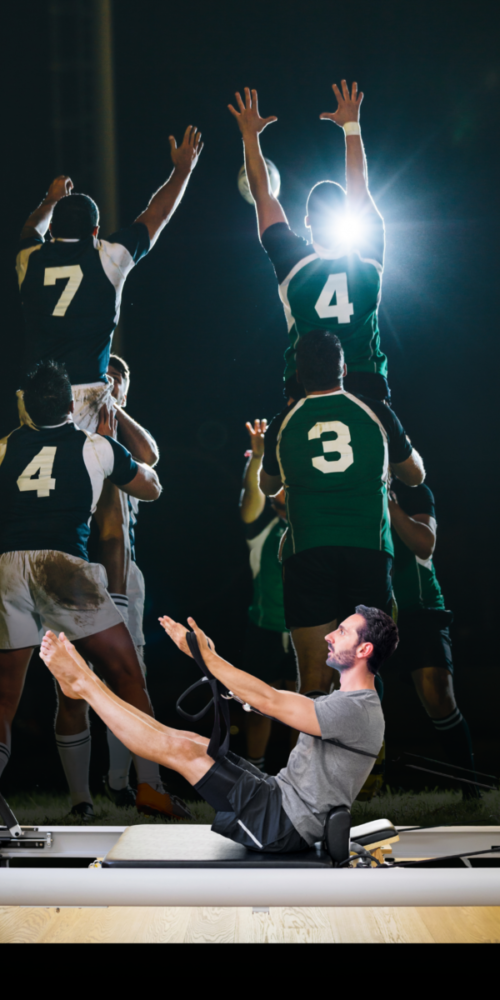
Man doing leg-raise on a Pilates reformer while a rugby team jumps in celebration behind him in a gym. (informative)PhysiotherapySports Physiotherapy
August 10, 2026

Reformer Pilates for Rugby Players: Strength, Mobility & Recovery

There's a growing trend of rugby league and rugby union players incorporating reformer Pilates into their training. Many players notice improvements when using reformer Pilates in conjunction with continuing strength…
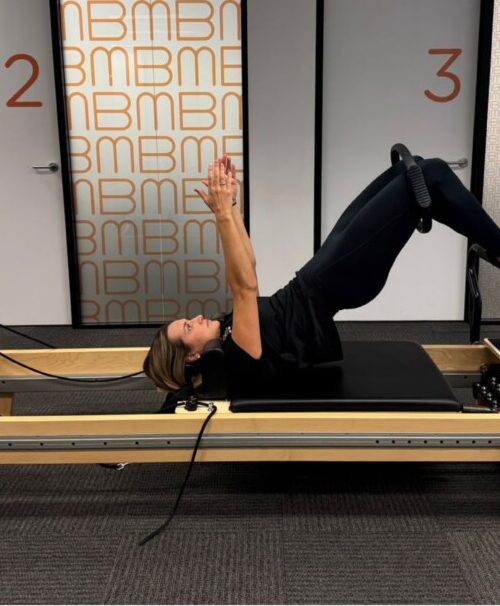
Physiotherapist guiding a client through glute strengthening Pilates exercises on the Reformer at Bend + Mend, Sydney CBDPhysiotherapyPilatesSpinal PhysiotherapySports Physiotherapy
July 22, 2026

Why Pilates is One of the Best Ways to Strengthen Your Glutes

The gluteal muscles are among the most powerful and important muscle groups in the body. They stabilise the pelvis and spine, generate power through the hips and protect the lower…
Two snowboarders sit on a snowy slope, facing a forest and distant mountains.PhysiotherapySports Physiotherapy
June 4, 2026

Skiing and Snowboarding Injuries

With just coming into winter, snow season is approaching where many of us will make our way to the snow fields with friends and family to ski and snowboard. While…