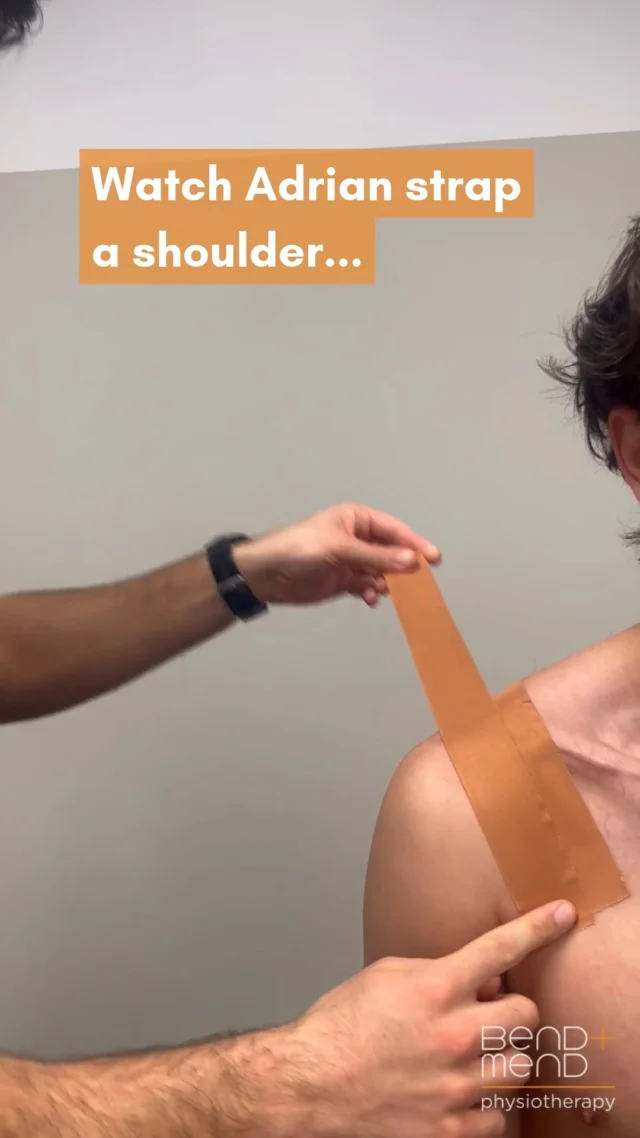
Frozen shoulder can creep up slowly. It can start as a nagging ache first, then a shoulder that won’t reach overhead, behind your back or into a jacket sleeve without a fight. It’s frustrating, it can wreck your sleep, and it’s often a slow condition to settle on its own. Frozen shoulder is estimated to affect around 2–5% of the general population, most commonly people in their 40s to 60s. There is a 6–17% risk of frozen shoulder developing in the other shoulder within 5 years, and recurrence in the same shoulder is rare.

What is frozen shoulder?

Frozen shoulder, medically known as adhesive capsulitis, is a condition where the capsule surrounding the shoulder joint becomes inflamed, thickened and tight. As the capsule tightens, the joint has less room to move, so pain and stiffness build over time. A key feature is that movement is limited both when you lift your arm yourself and when someone else tries to move it for you, especially when rotating the arm outwards.

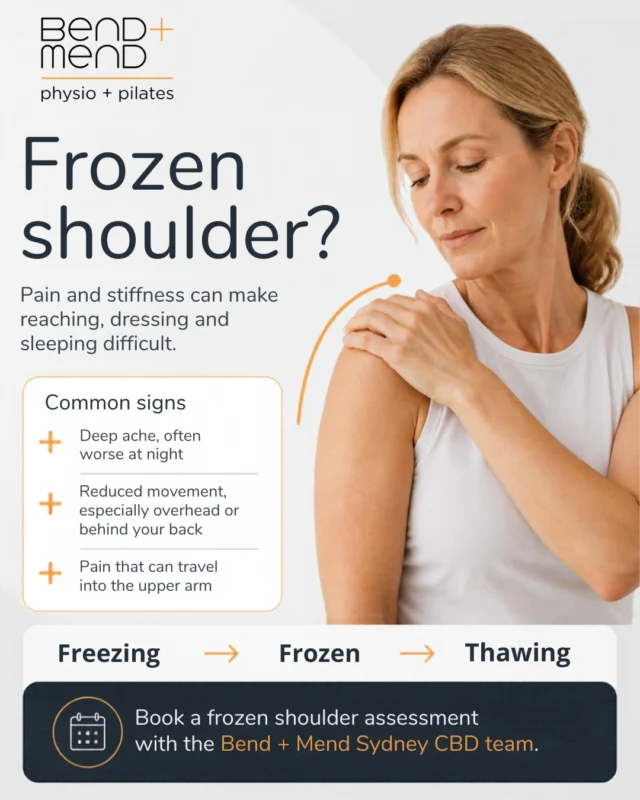
Common signs and symptoms

  • A deep, aching shoulder pain – Often worse at night or when lying on the affected side, and hard to pinpoint.
  • Gradually reduced movement – Especially rotating the arm outwards, reaching overhead and reaching behind your back.
  • Difficulty with everyday tasks – Dressing, washing your hair, doing up a bra, reaching for a seatbelt or getting something off a high shelf.
  • Pain spreading into the upper arm – A dull ache that travels down towards the elbow.
  • Tight, tired muscles around the shoulder – The surrounding muscles working overtime to compensate for the stiff joint.

The three stages of frozen shoulder

1

Freezing (painful) stage

Roughly 2 to 9 months. Pain is the main problem and movement starts to reduce. The focus is on settling pain and keeping gentle, comfortable movement.
2

Frozen (stiff) stage

Roughly 4 to 12 months. Pain often eases but stiffness is at its peak. Targeted mobility work and graded strengthening is prioritised.
3

Thawing (recovery) stage

Several months up to 2 years. Movement gradually returns. The focus shifts to restoring full range, strength and confidence.

Timeframes vary a lot from person to person. Overall, most people recover over 1 to 3 years, and many see meaningful improvement sooner with good management.

Causes and who gets it

In many people there’s no clear cause, but some factors are linked with a higher risk:

  • Age 40 to 60 – The most common age range for frozen shoulder.
  • Being female – It’s more common in women than men.
  • Diabetes or thyroid conditions – Both are associated with a higher risk, and frozen shoulder can be more persistent in people with diabetes.
  • Recent injury, surgery or immobilisation – Time in a sling or reduced shoulder use after a fracture or operation can trigger it.

Our approach at Bend + Mend

  • Careful assessment to confirm it’s frozen shoulder and not a different shoulder diagnosis.
  • Clear explanation of which stage you’re in, so your treatment matches what your shoulder can currently handle.
  • Gentle, graded mobility exercises, since forcing stretches in the painful stage tends to flare things up.
  • Manual therapy to ease pain and muscle tension and support joint movement.
  • Strengthening for the shoulder blade, rotator cuff and upper back as movement returns.
  • Practical advice on sleeping positions, work and daily activities.

Frequently Asked Questions

How long does frozen shoulder last?

Most people recover within 1 to 3 years. It typically moves through a painful stage, a stiff stage and a recovery stage. With the right treatment, pain can often be eased and function improved along the way.

Does frozen shoulder go away on its own?

For most people it does improve over time, but recovery can be slow and some stiffness may linger. Physiotherapy helps manage pain, protect your movement and support a smoother recovery.

Should I stretch or rest a frozen shoulder?

Complete rest can allow more stiffness, while aggressive stretching can flare your pain. Gentle, regular movement within a comfortable range is the usual guide, and we’ll show you what’s right for your stage.

How do I know if it's frozen shoulder or a rotator cuff problem?

In frozen shoulder, movement is limited even when someone else moves your arm, especially rotating outwards. In rotator cuff problems, the joint usually still moves passively but certain actions are painful or weak. A physio assessment can tell the difference.

Book Your Frozen Shoulder Assessment Get a clear plan for each stage of your recovery from our Sydney CBD team.

Man doing leg-raise on a Pilates reformer while a rugby team jumps in celebration behind him in a gym. (informative)PhysiotherapySports Physiotherapy
August 10, 2026

Reformer Pilates for Rugby Players: Strength, Mobility & Recovery

There's a growing trend of rugby league and rugby union players incorporating reformer Pilates into their training. Many players notice improvements when using reformer Pilates in conjunction with continuing strength…
Physiotherapist guiding a client through glute strengthening Pilates exercises on the Reformer at Bend + Mend, Sydney CBDPhysiotherapyPilatesSpinal PhysiotherapySports Physiotherapy
July 22, 2026

Why Pilates is One of the Best Ways to Strengthen Your Glutes

The gluteal muscles are among the most powerful and important muscle groups in the body. They stabilise the pelvis and spine, generate power through the hips and protect the lower…
Two snowboarders sit on a snowy slope, facing a forest and distant mountains.PhysiotherapySports Physiotherapy
June 4, 2026

Skiing and Snowboarding Injuries

With just coming into winter, snow season is approaching where many of us will make our way to the snow fields with friends and family to ski and snowboard. While…